- 241 Concession 4 West, Tiny, Ontario L0L 2T0, Canada
- info@onsiteseptic.com
- 705.322.0066


Protect Your Septic System and Your Property
A properly maintained septic system can provide many years of reliable service. Everyday habits, water use, landscaping, and activity around the septic tank and leaching bed can all affect how well the system performs.
Understanding what you should and should not do around your septic system can help reduce unnecessary strain, prevent damage, and protect both your property and the surrounding environment.
Septic System Do's
Following a few simple best practices can help extend the life of your septic system and reduce the risk of unexpected problems.
- Know the location of your septic tank and leaching bed.
- Keep your septic system drawings and as-built plans in a safe place.
- Divert roof drainage, surface water, and runoff away from the septic system.
- Have your septic tank inspected and pumped regularly as recommended.
- Repair leaking faucets, toilets, and plumbing fixtures promptly.
- Conserve water and avoid placing unnecessary strain on the system.
- Use water-efficient toilets, fixtures, and appliances where possible.
- Clean washing machine lint filters regularly.
- Keep septic tank access lids secure and accessible.
- Maintain records of inspections, pumping, repairs, and other service work.
Septic System Don'ts
Many septic problems are caused by activities that interfere with the system's ability to treat wastewater or physically damage the tank and leaching bed.
- Do not flush hazardous chemicals, paint, cigarette butts, sanitary products, or other inappropriate materials.
- Do not use a garbage disposal or garburator with your septic system.
- Do not plant trees or large shrubs too close to the septic tank or leaching bed.
- Do not rely on septic additives or products marketed as substitutes for proper maintenance.
- Do not dig on your property without knowing where your septic system is located.
- Do not drive, park, or place heavy equipment over the septic tank or leaching bed.
- Do not connect rain gutters, sump pumps, or storm drainage to the septic system.
- Do not leave faucets running to prevent freezing. Plumbing should be properly protected and insulated instead.
- Do not direct water softener discharge into the septic system without first determining whether it is appropriate for your system.
- Never enter a septic tank. Septic tanks contain dangerous gases and should only be accessed by qualified professionals.
Simple Maintenance Makes a Difference
Routine care is one of the best ways to protect your investment. Conserving water, keeping inappropriate materials out of the system, protecting the leaching bed, and arranging regular inspections and pumping can all contribute to better long-term performance.
If you are unsure about the condition of your septic system or are planning changes to your property, speak with an experienced septic professional before beginning the work.
Septic System Separation Distances
Proper placement is an important part of septic system design. Ontario requirements establish minimum separation distances between septic systems and features such as property lines, wells, buildings, trees, gardens, and other structures.
The diagram below provides a helpful visual reference for common separation distances and illustrates why septic planning should be considered early when laying out or redeveloping a property.
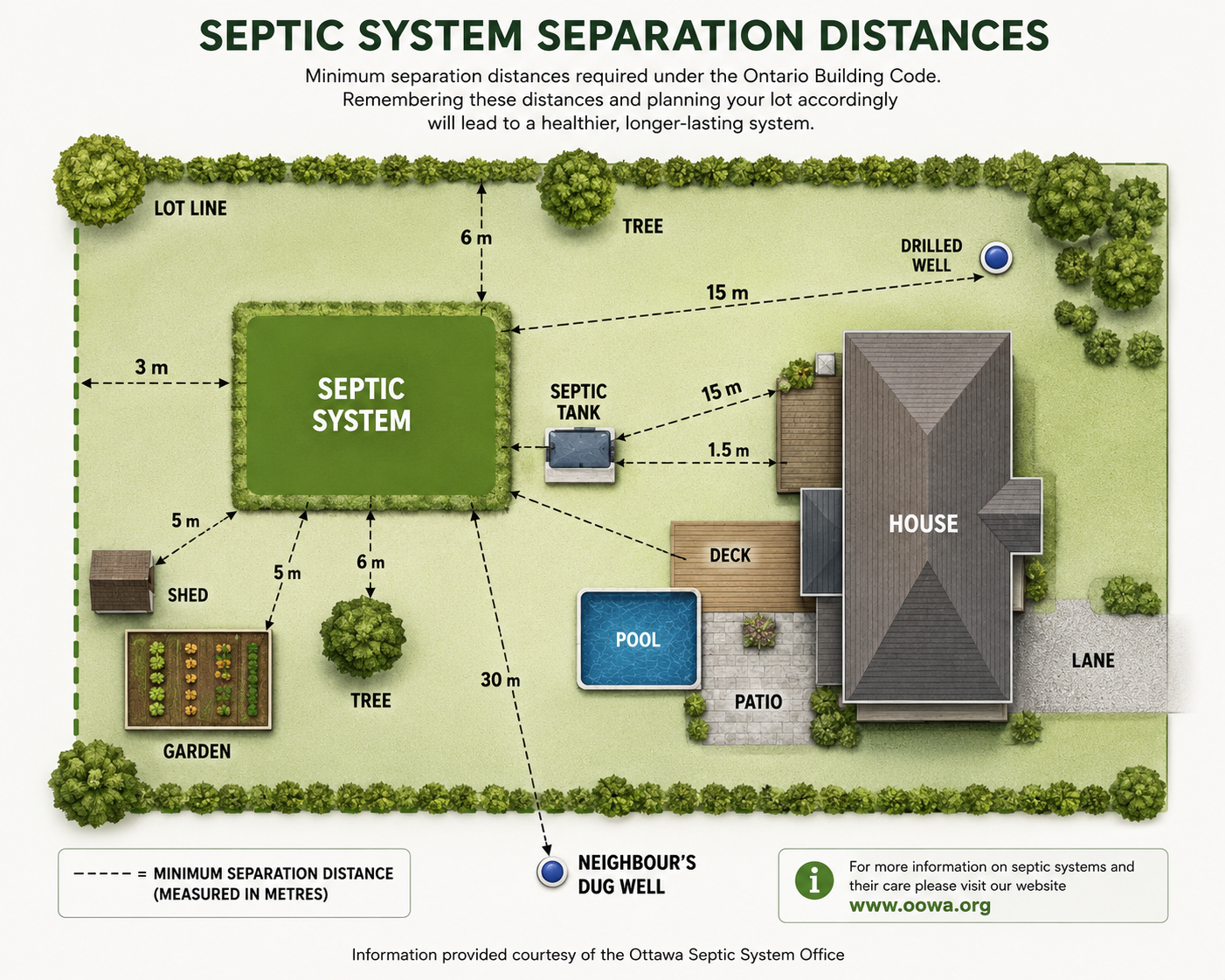
Before planning construction, landscaping, additions, pools, decks, or other improvements near an existing septic system, confirm the applicable requirements for your property with a qualified septic professional and the appropriate local authority.

Ready to Discuss Your Project?
Whether you are planning a new septic system, replacing an existing one, or need excavation and site work, our team is here to help. Tell us a little about your project and we’ll help you determine the right next step.
Prefer to speak with us directly? Call 705.322.0066