- 241 Concession 4 West, Tiny, Ontario L0L 2T0, Canada
- info@onsiteseptic.com
- 705.322.0066


Protect Your Septic System and the Environment
How you use and maintain your septic system has a direct impact on how well it performs and how long it lasts. Everyday decisions, including what goes down the drain, how much water your household uses, and how the area around the system is treated, can make a significant difference.
Proper septic care can help prevent costly repairs, extend the life of your system, and protect groundwater, nearby lakes, and other water sources. Understanding the basics of how your system works is an important first step.
How Your Septic System Works
A typical on-site sewage system has two primary components: the septic tank and the leaching bed.
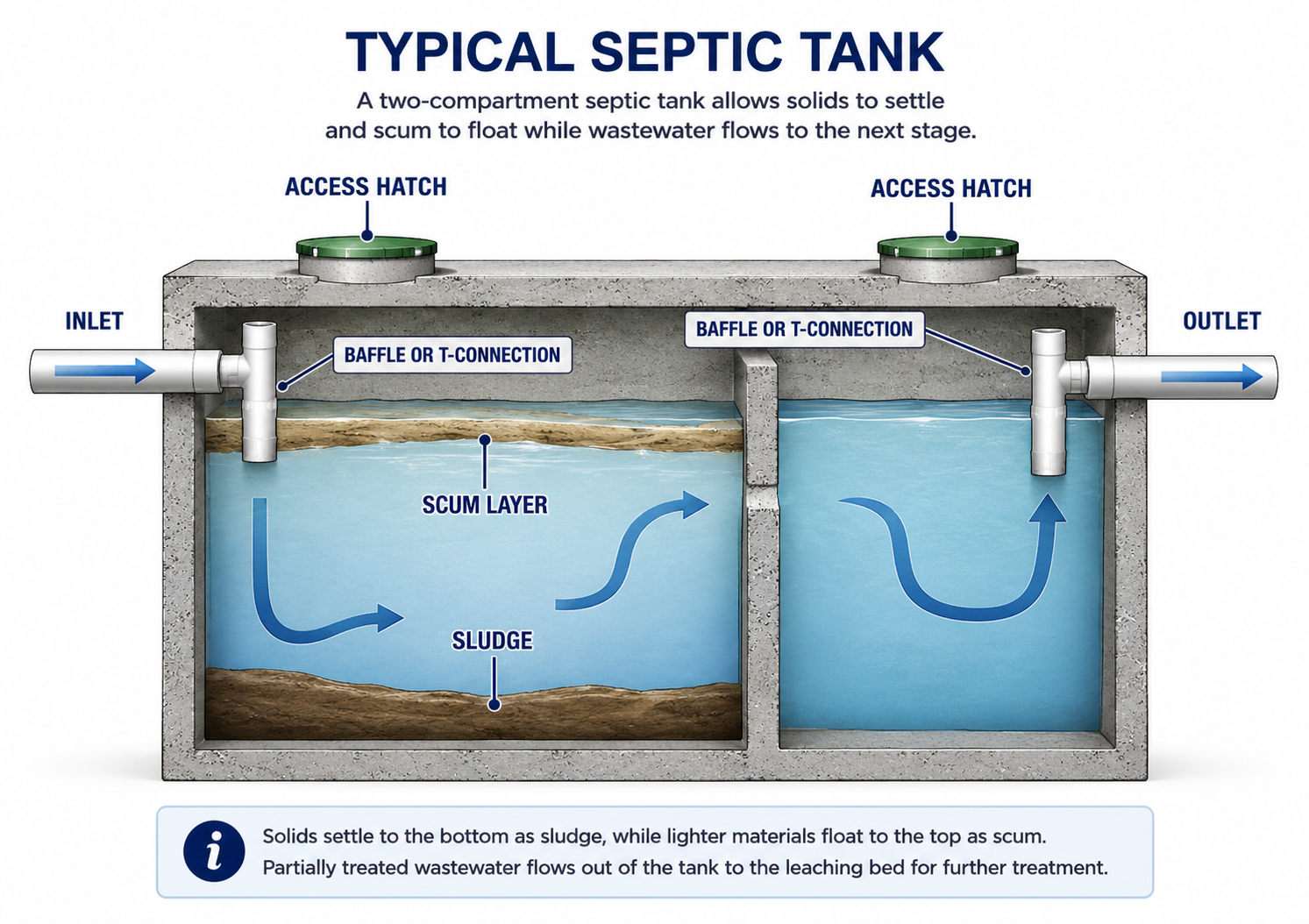
The septic tank is an underground, watertight chamber that receives wastewater from your home. Inside the tank, solids settle to the bottom while lighter materials rise to the surface. This separation process allows partially treated wastewater to continue toward the leaching bed.
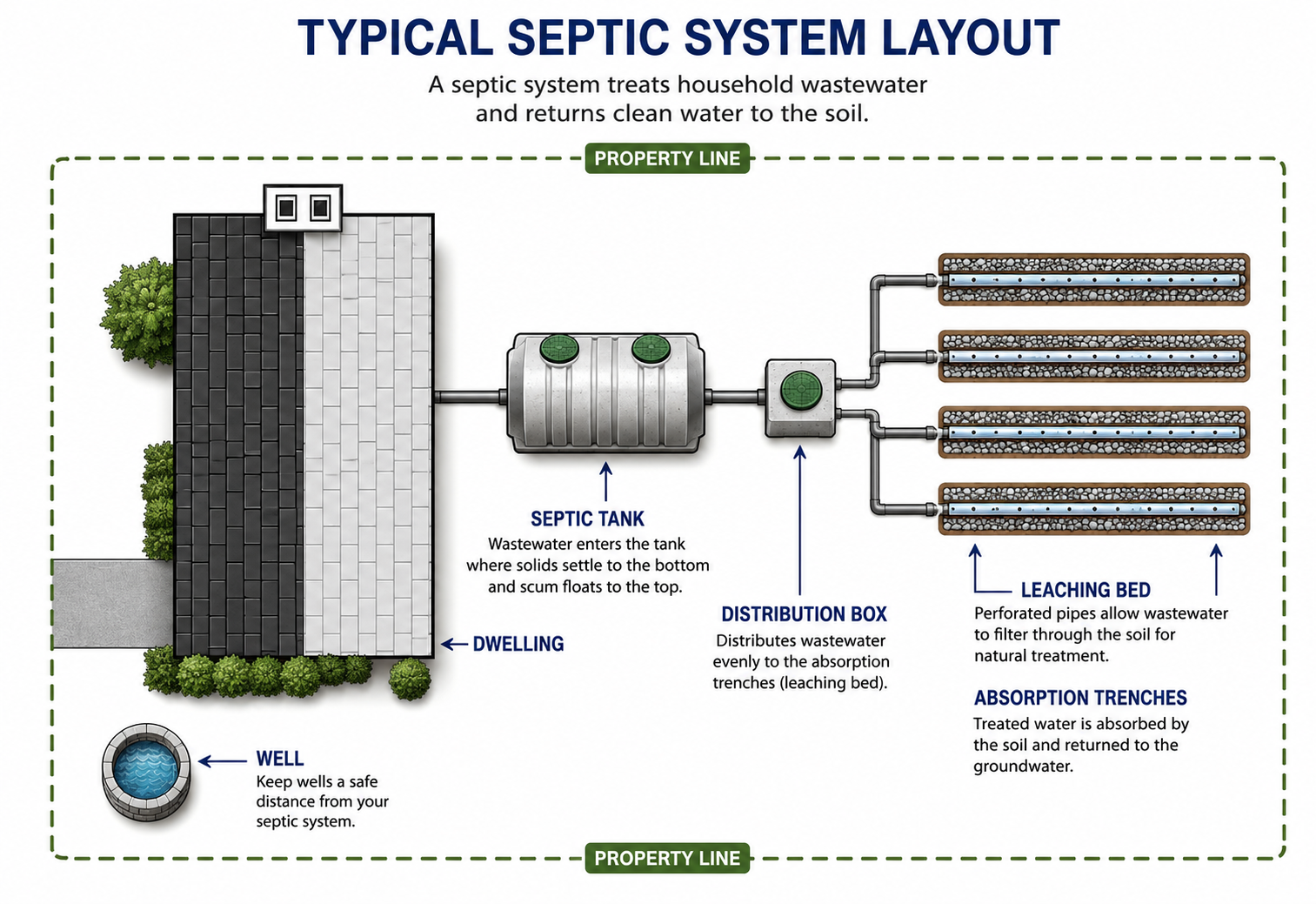
Wastewater then travels through a distribution system into the leaching bed, where perforated pipes distribute it through the surrounding soil. Naturally occurring bacteria in the soil provide further treatment before the water eventually returns to the groundwater system.
Do You Have a Septic System?
Most rural homes, cottages, and recreational properties that are not connected to a municipal sewer rely on an on-site septic system.
In some cases, the system may not be immediately obvious. A large open grassed area without trees, patios, or paved surfaces may indicate the location of a leaching bed, while some properties may have a raised bed.
If you own or purchase a rural property, it is important to know:
- Whether the property is served by a septic system
- Where the septic tank and leaching bed are located
- The approximate age and condition of the system
- Where system drawings and site plans are kept
Keep all septic records, drawings, permits, inspections, and maintenance information in a safe place for future reference.
Common Septic System Problems
Recognizing warning signs early can help prevent a smaller issue from developing into a major system failure.
Signs that your septic system may require attention include:
- Slow-draining sinks, tubs, or toilets
- Sewage odours inside the home or around the septic system
- Soggy or unusually wet ground around the tank or leaching bed
- Standing water or sewage at the surface
- Alarm signals on advanced treatment systems
- Pumps running continuously or failing to operate
- Unusually green or lush grass over the leaching bed
- Algae growth in nearby lakes or water bodies
- Elevated bacteria or nitrate levels in well water
If you notice signs of a possible septic problem, contact a qualified septic professional to determine the appropriate next step.
What Not to Flush
Your septic system is designed to treat household wastewater, not garbage, chemicals, or other waste products. Certain materials can clog the system, disrupt the bacteria responsible for treatment, or cause the septic tank to fill more quickly.
Avoid putting the following into your septic system:
- Fats, oils, and grease
- Gasoline or antifreeze
- Paints, varnishes, and solvents
- Drain cleaners and harsh chemicals
- Pesticides
- Nail polish remover
- Cat litter
- Tampons and sanitary products
- Diapers
- Paper towels and facial tissues
- Plastics
- Coffee grounds and egg shells
- Cigarette filters
Septic additives and starters are generally unnecessary and should not be treated as a substitute for proper maintenance.
Septic Maintenance Best Practices
Simple habits can reduce unnecessary strain on your septic system and help extend its useful life.
- Conserve water and use water-saving fixtures where practical
- Repair leaking faucets and toilets promptly
- Run dishwashers and washing machines with full loads
- Avoid using garbage disposal units
- Have the septic tank inspected regularly
- Pump the tank approximately every 3 to 5 years, or as recommended for your household and system
- Keep tank access points accessible
- Direct roof drainage and surface runoff away from the septic system
- Keep records of inspections, pumping, repairs, and maintenance
- Use household products responsibly and avoid excessive chemical discharge
Too much water entering a septic system can reduce treatment effectiveness and place unnecessary strain on the tank and leaching bed.
Protect Your Leaching Bed
The leaching bed plays an essential role in treating wastewater and protecting groundwater. The area above and surrounding it should be protected from activities that can compact the soil, damage pipes, introduce roots, or add excess water.
Avoid:
- Parking or driving vehicles over the leaching bed
- Placing heavy equipment over the system
- Building patios, decks, sheds, or other structures above it
- Planting trees or large shrubs nearby
- Excessive lawn watering
- Directing roof or surface runoff toward the bed
- Regular snowmobile or other heavy winter traffic over the area
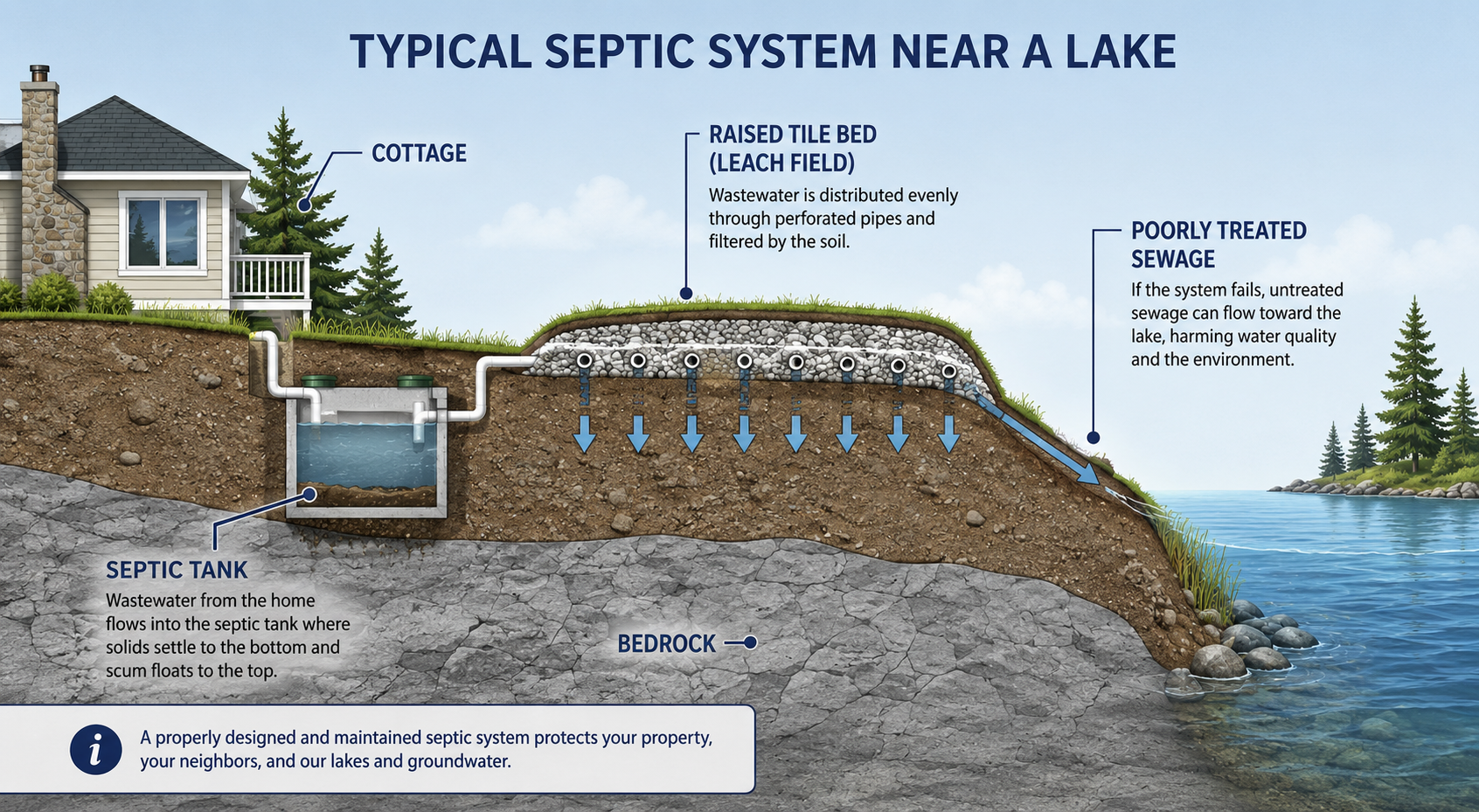
Protecting this area helps preserve the soil conditions necessary for your septic system to operate effectively.
Water Treatment Systems and Backwash
Additional water entering a septic system from water treatment equipment can affect system performance. Water softener backwash, furnace condensate, and other discharge sources may introduce additional water or substances that the septic system was not designed to handle.
If your property uses water treatment equipment, speak with a septic professional about the appropriate way to manage these discharge sources.
Tank Inspection and Pumping
Routine septic tank inspection and pumping are among the most important steps you can take to prevent larger problems.
An inspection can help identify excessive solids, blocked outlets, damaged components, or other maintenance requirements before they lead to system failure. Septic tanks also contain dangerous gases and should only be opened or inspected by qualified professionals.
Most septic tanks should be pumped approximately every 3 to 5 years, although the appropriate schedule depends on factors such as:
- Household size
- Tank capacity
- Water usage
- System design
- Frequency of occupancy
Homes or cottages with higher wastewater usage may require more frequent service.
New Septic Technologies
Modern septic systems can incorporate advanced treatment technologies designed to improve wastewater treatment or accommodate challenging properties.
Depending on the application, these systems may include pumps, aeration or oxygen-enrichment treatment, specialized filtration media, or other treatment components. Advanced systems can sometimes provide improved treatment quality or allow septic systems to work within more restrictive site conditions.
They may also require electrical connections, regular servicing, and manufacturer maintenance agreements. Understanding these ongoing requirements is an important part of choosing the right system for your property.
Septic Systems and the Ontario Building Code
Septic systems in Ontario are regulated under the Ontario Building Code, with local authorities responsible for permitting and inspection.
Requirements can affect system design, location, construction, servicing, and property redevelopment. If you are planning a new septic system, replacing an existing one, or making changes to your property, confirm the applicable requirements before beginning work.
Need Help With Your Septic System?
Whether you are planning a new system, considering an upgrade, experiencing a problem, or simply have questions about your property, Onsite Septic Solutions can help you determine the right next step.

Ready to Discuss Your Project?
Whether you are planning a new septic system, replacing an existing one, or need excavation and site work, our team is here to help. Tell us a little about your project and we’ll help you determine the right next step.
Prefer to speak with us directly? Call 705.322.0066